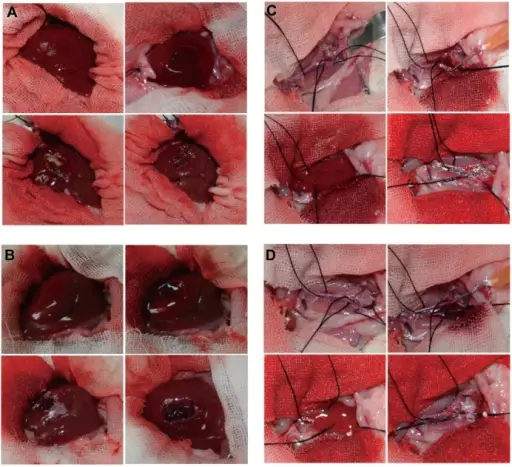
Hemostasis
The body’s natural response to an injury that stops the bleeding and fixes the damage is known as hemostasis.
Blood must be able to flow freely through blood vessels in order to reach tissues.
Hemostasis, which involves the creation of a thrombus (clot) at the site of vascular injury, repairs damage to the wall.
There are two phases of hemostasis:
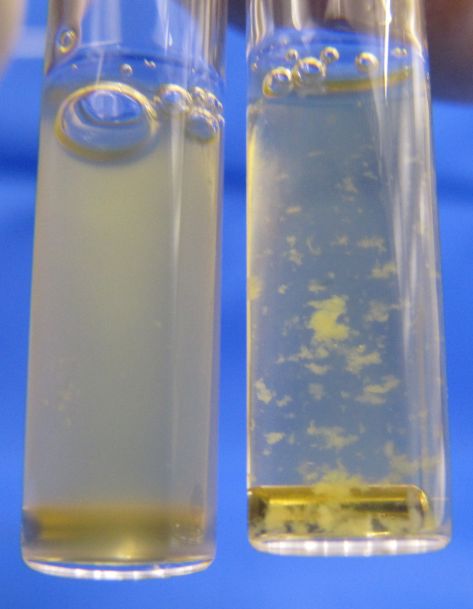 Hemostasis. Aggregation of thrombocytes (platelets). Platelet-rich human blood plasma (left vial) is a turbid liquid. Upon addition of ADP, platelets are activated and start to aggregate, forming white flakes (right). Dietzel65, Steffen Dietzel. Not altered. CC BY-SA 3.0
Primary Hemostasis
Primary hemostasis forms a platelet plug.
See primary hemostasis pathology study guide for further detail.
Primary hemostasis is caused by interactions between:
- Platelets
- Endothelial cells lining the vessel wall
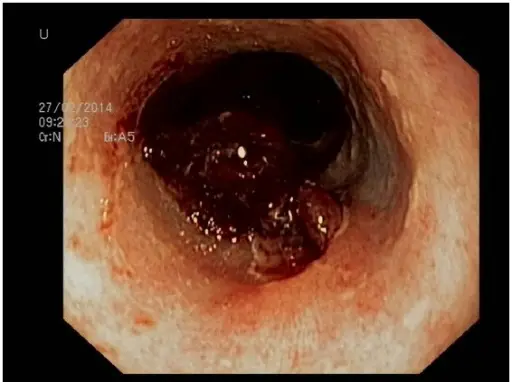 The clot in the esophagus at the site of the primary hemostasis. Combined use of clips and nylon snare ("tulip-bundle") as a rescue endoscopic bleeding control in a mallory-weiss syndrome. Ivekovic H, Radulovic B, Jankovic S, Markos P, Rustemovic N - Case reports in gastrointestinal medicine (2014). Not Altered. CC.
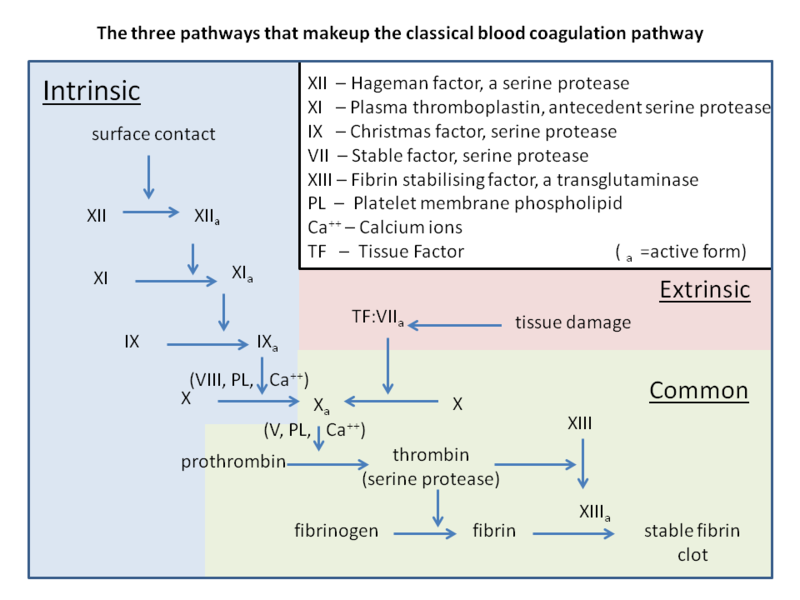
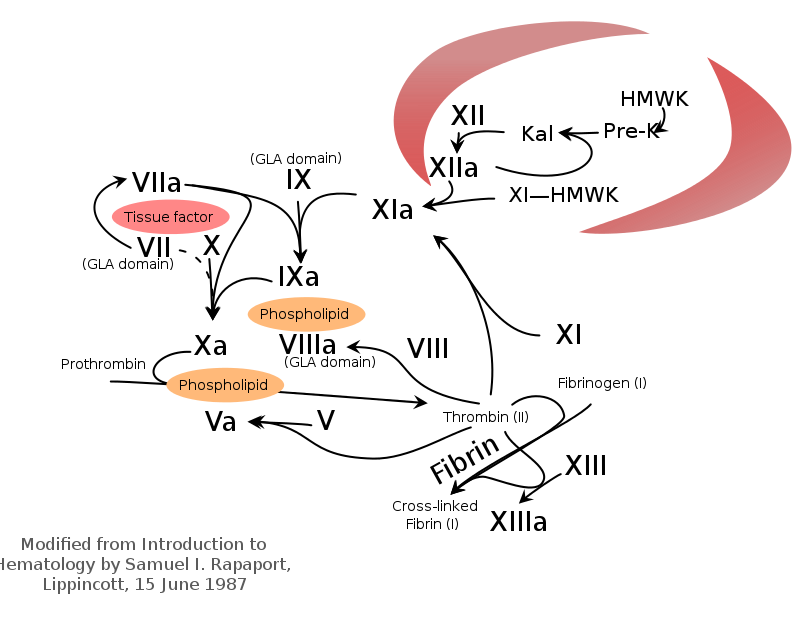
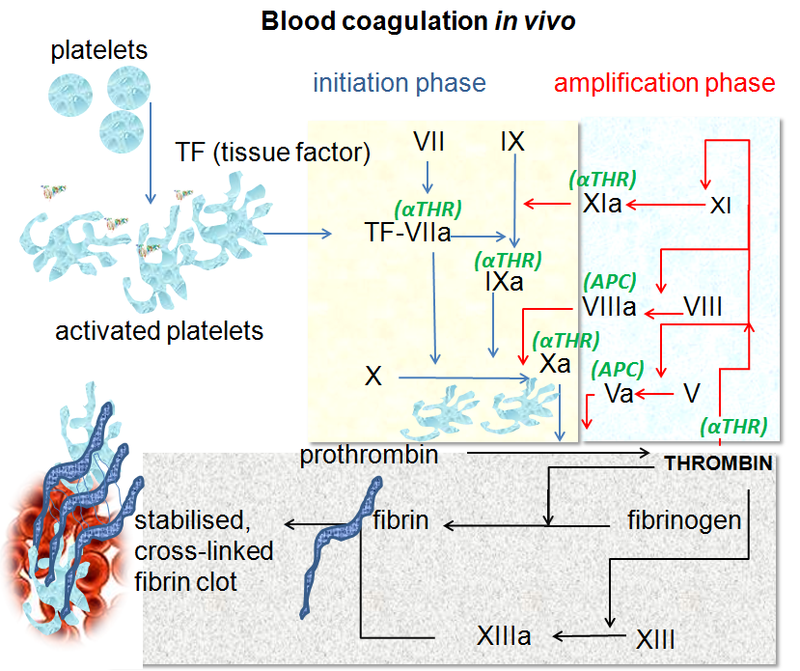
Secondary Hemostasis
Secondary hemostasis stabilizes the platelet plug.
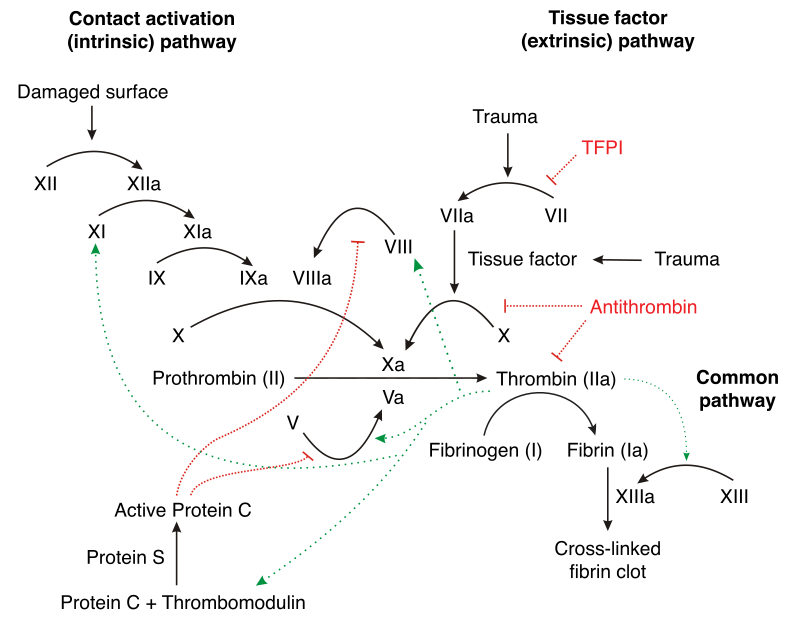
Secondary hemostasis is mediated by the coagulation cascade.
See secondary hemostasis pathology study guide for further detail.
 Secondary Hemostasis. Not altered. CC