Chronic Renal Failure Pathology Video
Chronic Renal Failure
Chronic renal failure is end-stage kidney failure.
Chronic renal failure is caused by:
- Vascular insults
- Inflammatory issues
- Tubular insults
- Glomerular insults
- Inflammatory insult
The most common causes of chronic renal failure are:
- Hypertension
- Diabetes mellitus
- Glomerular disease
Clinical features of chronic renal failure include:
- Uremia
- Hypertension
- Hyperkalemia
- Anemia
- Hypocalcemia
- Renal osteodystrophy
Uremia is the result of increased levels of nitrogenous waste products in the blood (azotemia).
Uremia symptoms include:
- Nausea
- Anorexia
- Pericarditis
- Platelet dysfunction
- Encephalopathy with asterixis
- Urea crystal deposition in the skin
- Salt and water retention with resultant hypertension
Complications of chronic renal failure include:
- Hyperkalemia, because renal disease affects potassium homeostasis, with metabolic acidosis
- Insufficient renal bicarbonate production and decreased tubular bicarbonate reabsorption in proportion to the body’s synthesized and consumed acids
- Anemia as a result of reduced erythropoietin synthesis by renal peritubular interstitial cells
- Hypocalcemia because of a decrease in 1-alpha-hydroxylation of vitamin D by proximal renal tubule cells and hyperphosphatemia
- Renal osteodystrophy caused by secondary hyperparathyroidism, osteomalacia, and osteoporosis
- Cysts often develop within shrunken end-stage kidneys during dialysis, increasing risk for renal cell carcinoma
If severe enough, chronic renal failure is treated by:
- Medications (ACE inhibitors)
- Dialysis
- Kidney transplant
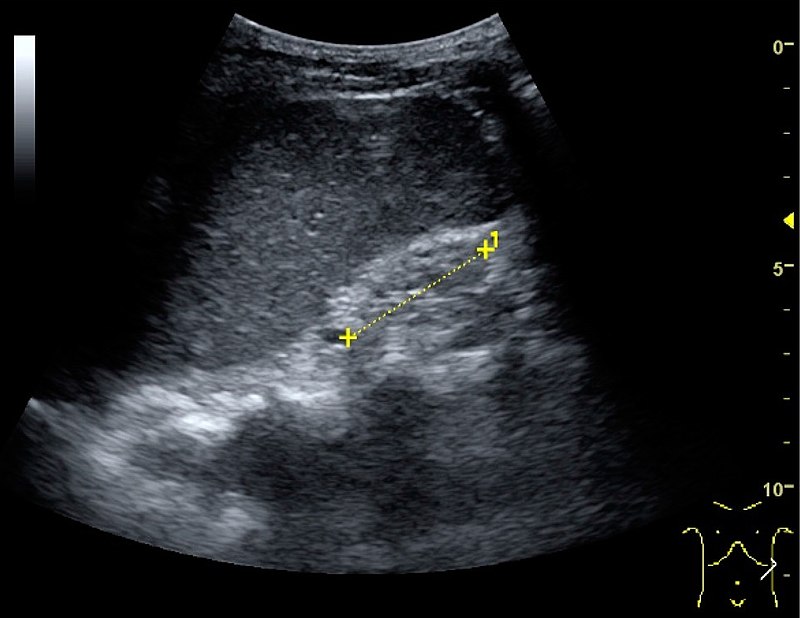
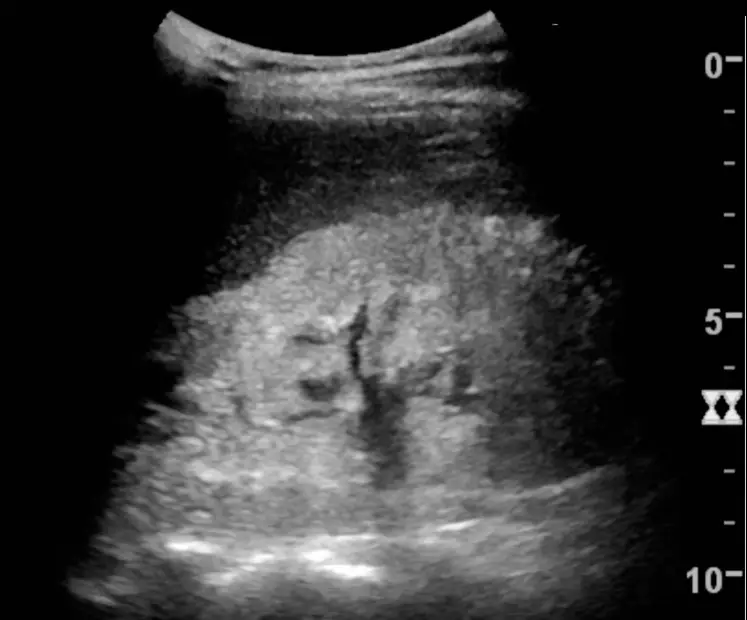
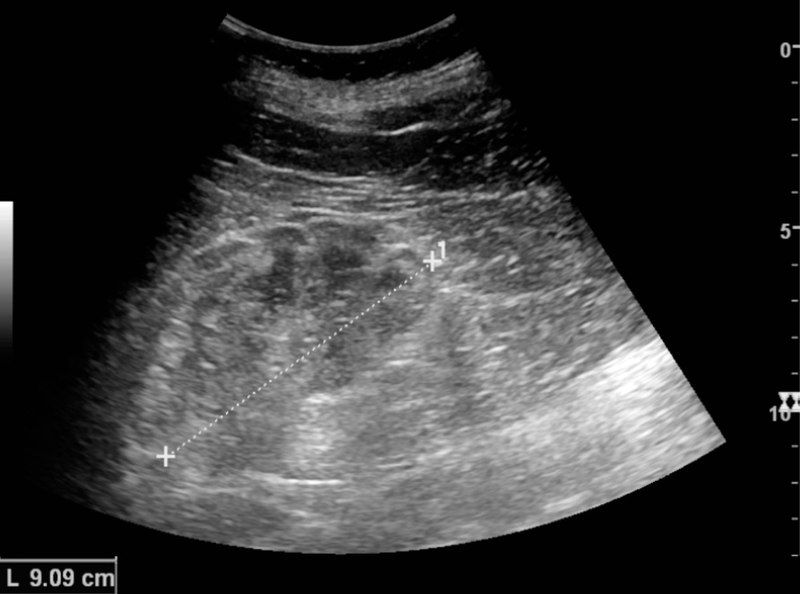 Chronic Renal Failure. Chronic renal disease caused by glomerulonephritis with increased echogenicity and reduced cortical thickness. Measurement of kidney length on the US image is illustrated by '+' and a dashed line.[48] Kristoffer Lindskov Hansen, Michael Bachmann Nielsen and Caroline Ewertsen Not altered. CC-BY 4.0