Nasopharynx and Larynx Pathology Video
Nasopharynx
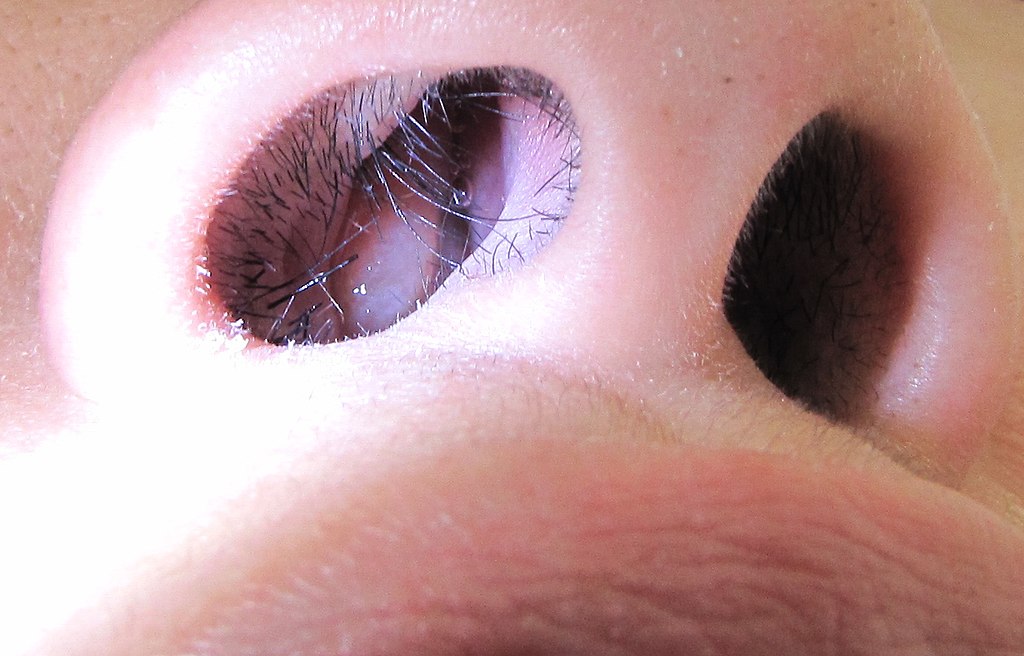
Rhinitis
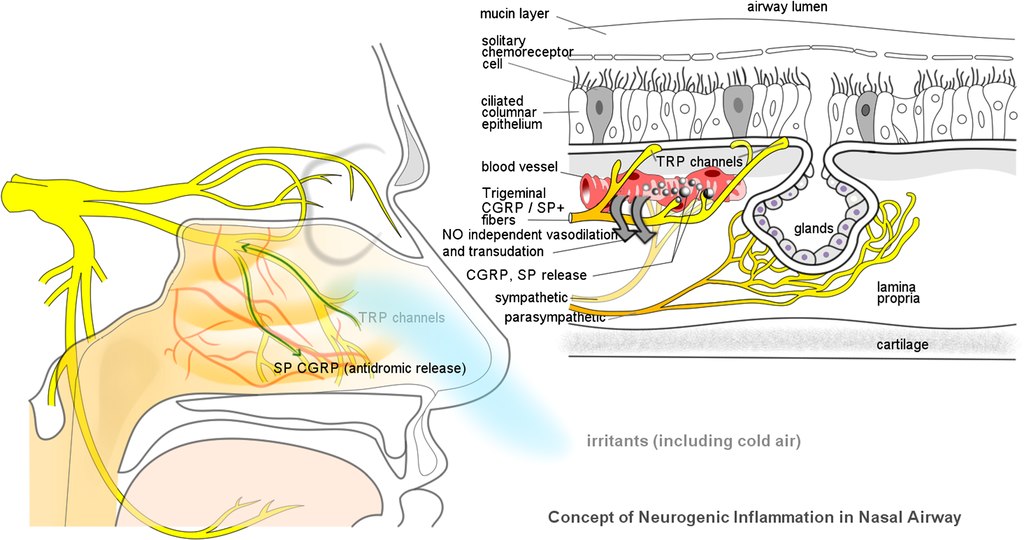
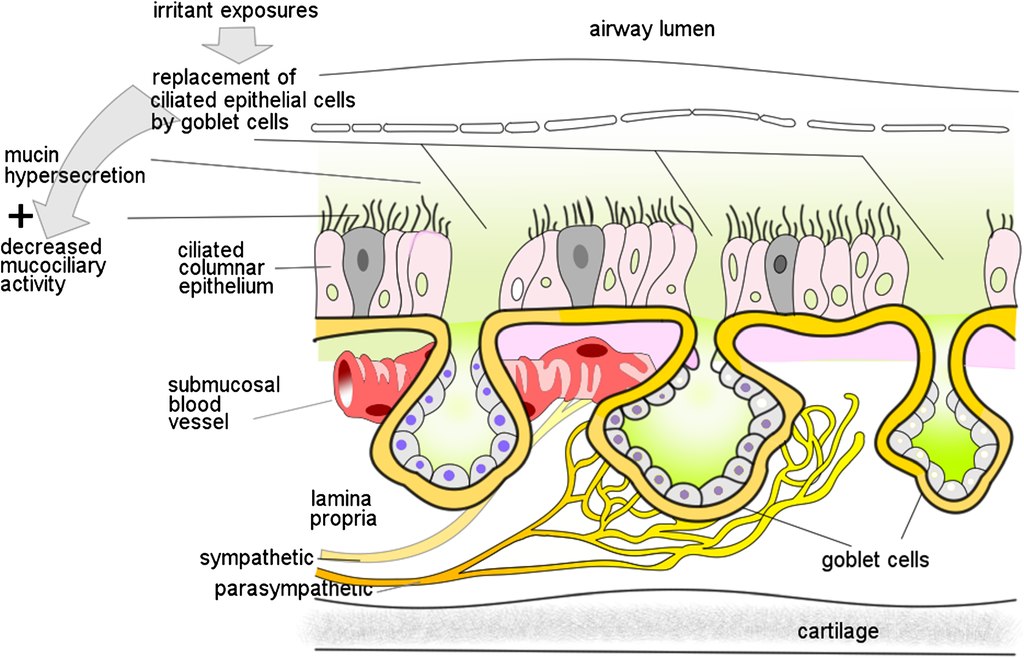
Rhinitis is inflammation of the nasal mucosa.
Adenoviruses are the most commonly known cause of rhinitis.
Common symptoms of rhinitis include:
- Sneezing
- Congestion
- Runny nose
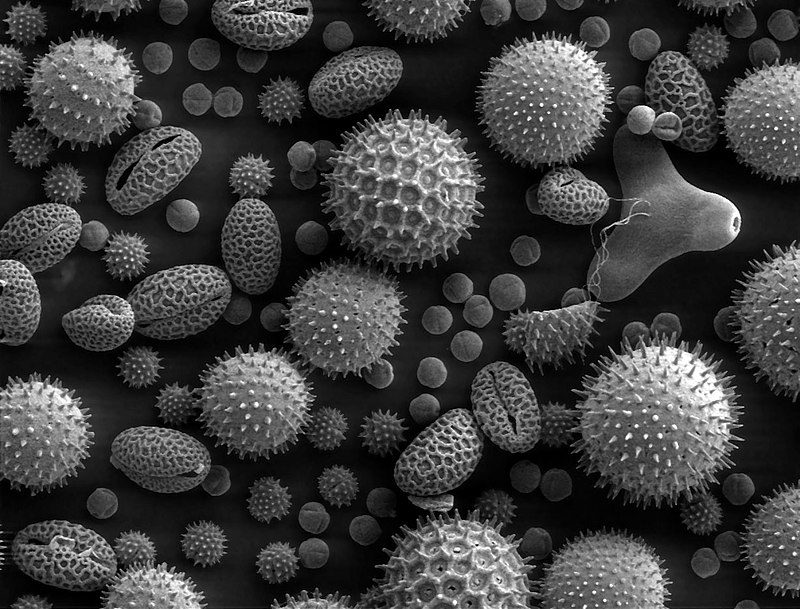
A type I hypersensitivity reaction (such as one in response to pollen) causes allergic rhinitis, a form of rhinitis.
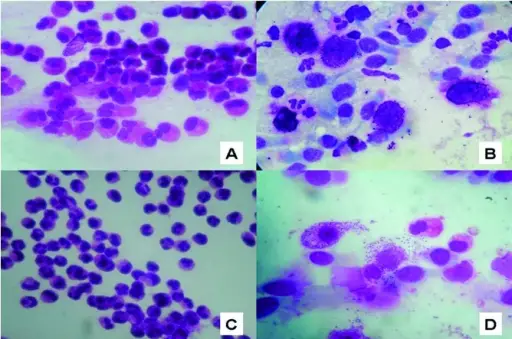
Rhinitis is characterized by an eosinophil filled inflammatory infiltrate.
Patients with eczema and asthma are classically susceptible to rhinitis.
Rhinitis is associated with asthma and eczema.
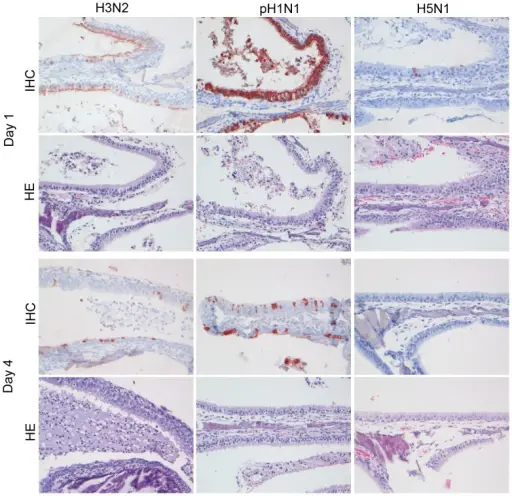
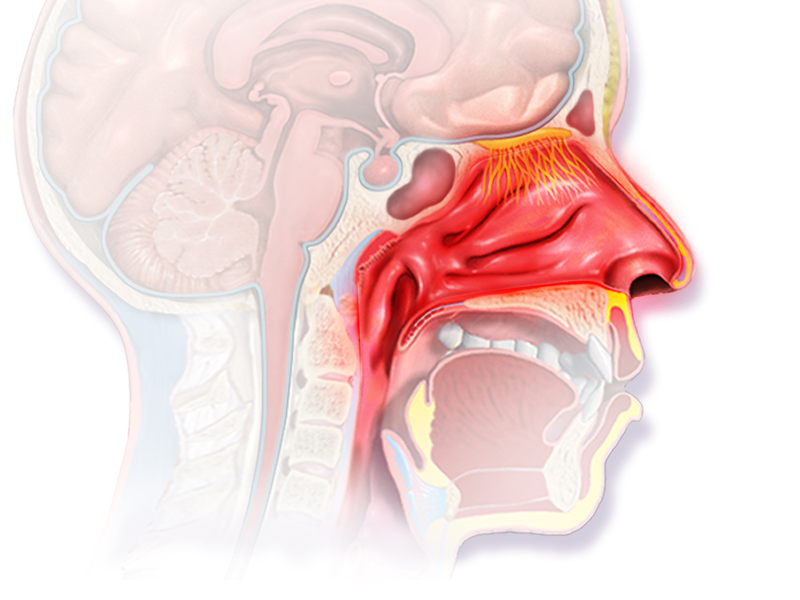 Rhinitis. Illustration depicting inflammation associated with allergic rhinitis BruceBlaus. Not altered. CC BY 3.0.

Nasal Polyp
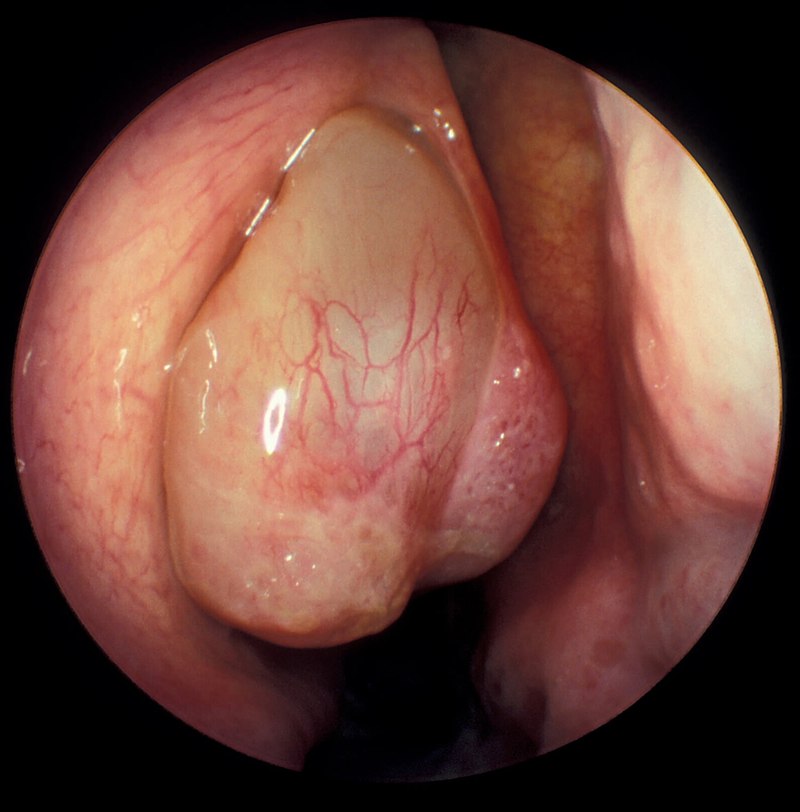
Nasal polyps are edematous, polypoid, irritated nasal mucosa.
Nasal polyps are classically associated with:
- Cystic fibrosis
- Aspirin-intolerant asthma
- Recurrent rhinitis
Ten percent of asthmatic people have aspirin-intolerant asthma, which is defined by the triad of:
- Asthma
- Nasal polyps
- Aspirin-induced bronchospasms
 Nasal Polyp. Nasal polyp in right nostril. © MathieuMD. Not altered. CC BY-SA 3.0
Angiofibroma
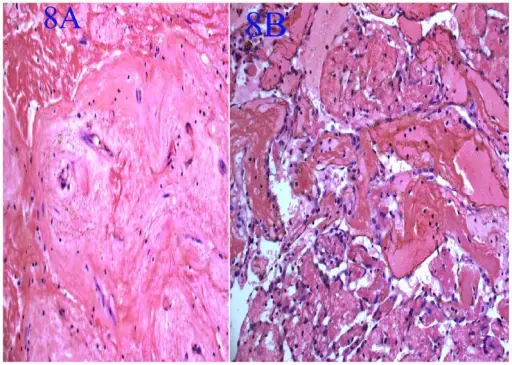
Angiofibromas consist of large blood arteries and fibrous tissue make up this benign tumor of the nasal mucosa, which is typically found in male adolescents.
Severe epistaxis is associated with angiofibromas.
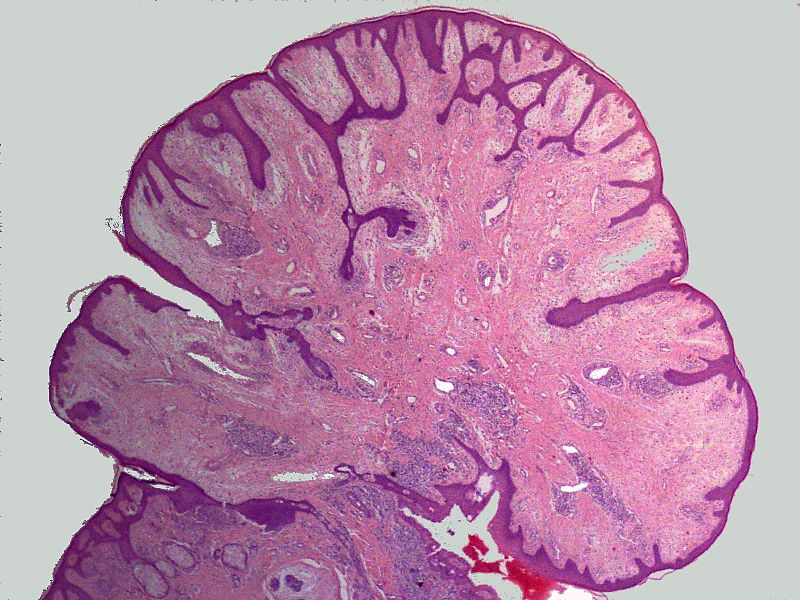 Angiofibroma. Fibrous papulae LWozniak&KWZielinski. Not altered CC BY-SA 3.0
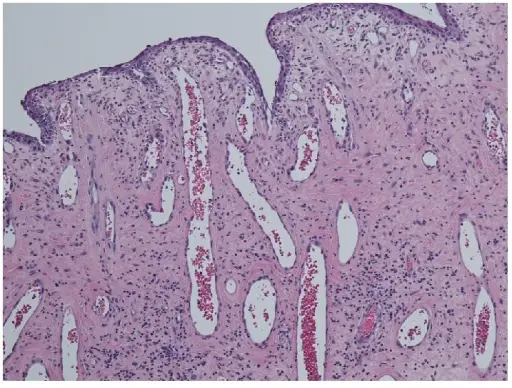
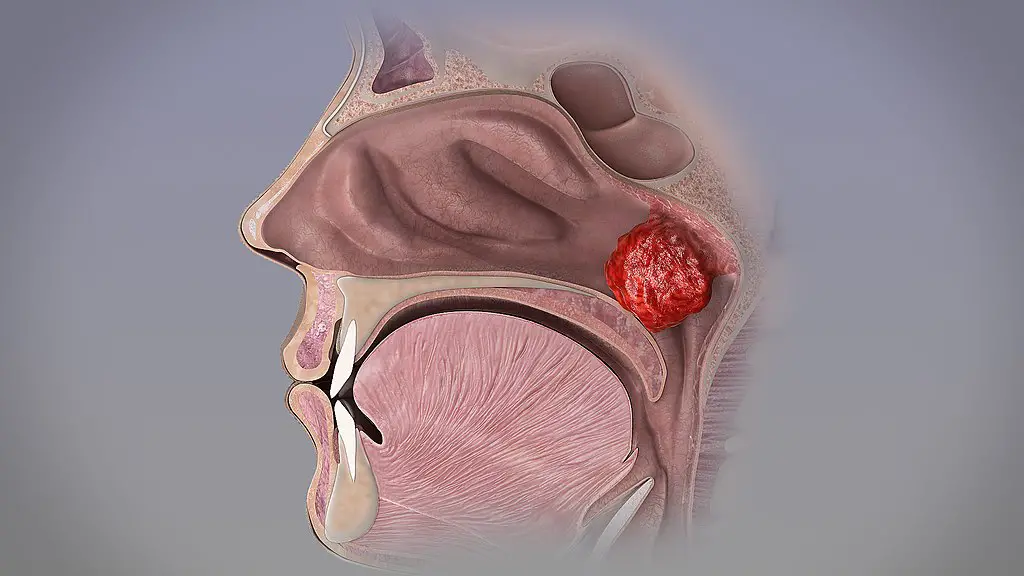
Nasopharyngeal Carcinoma
Nasopharyngeal carcinoma is a malignant tumor of nasopharyngeal epithelium.
Epstein Barr virus (EBV) may be a cause of nasopharyngeal carcinoma.
Nasopharyngeal carcinoma typically is observed in Chinese adults and African youngsters.
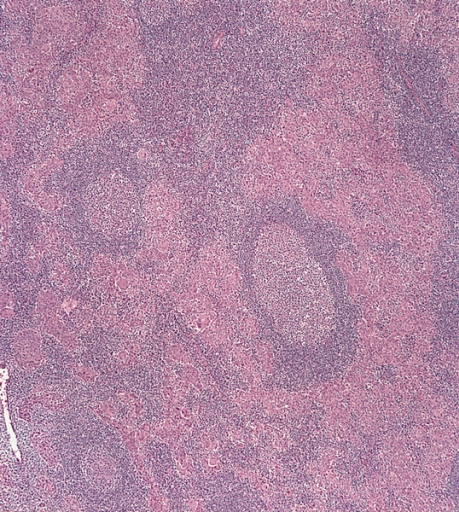
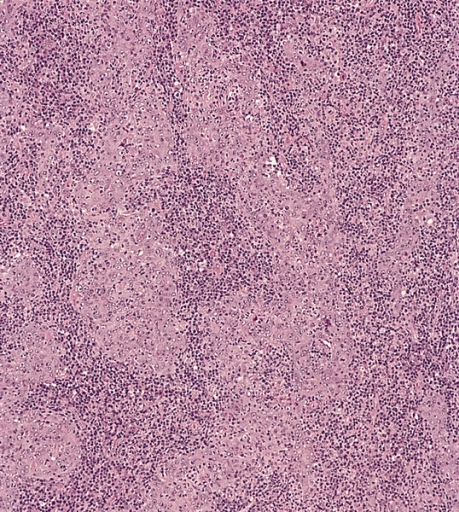
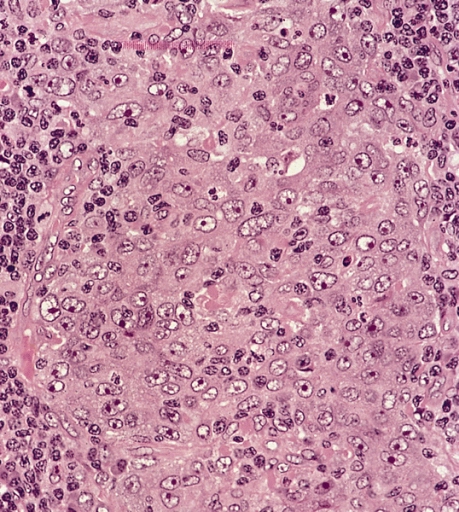
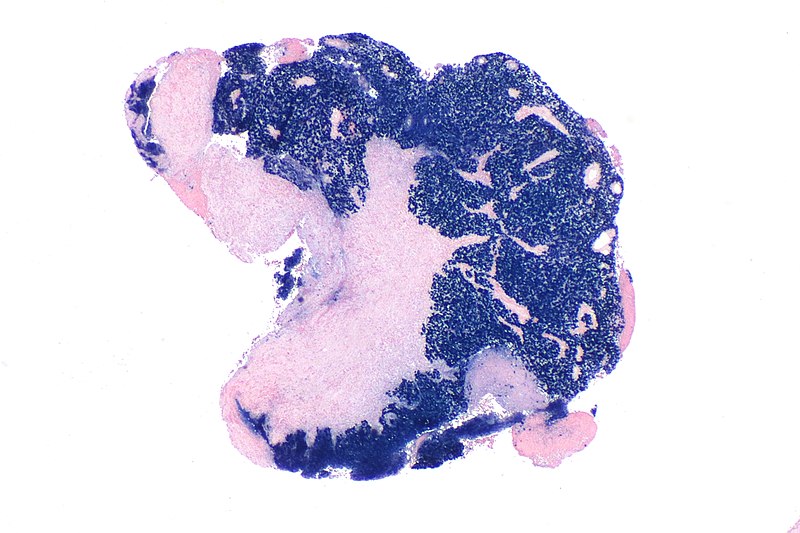
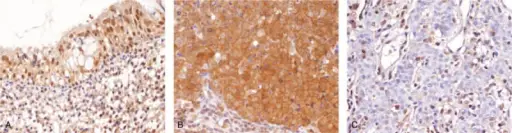
Histology of nasopharyngeal carcinoma shows pleomorphic keratin-positive epithelial cells (poorly differentiated squamous cell carcinoma) in a lymphocyte background.
Nasopharyngeal carcinoma frequently presents with cervical lymph node involvement.
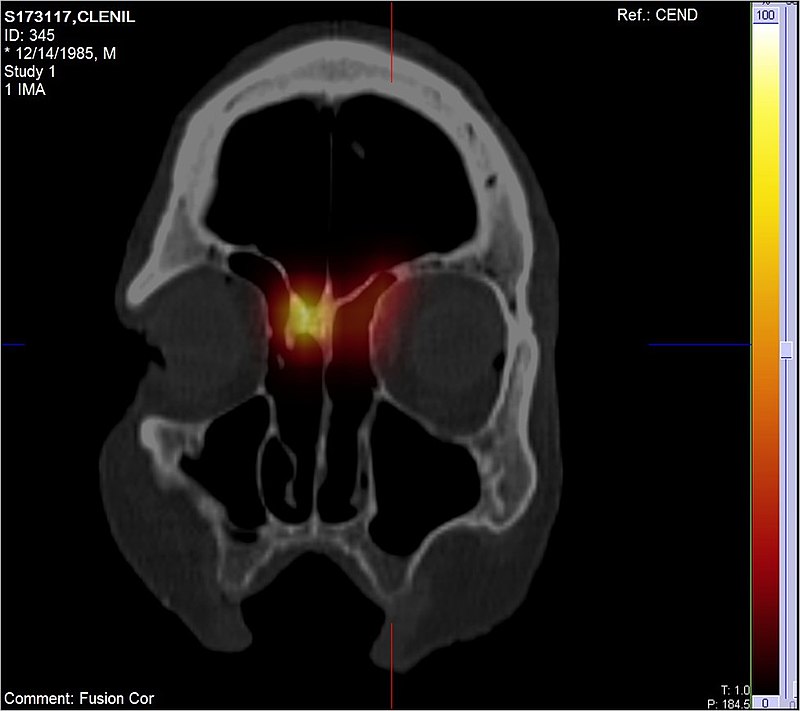
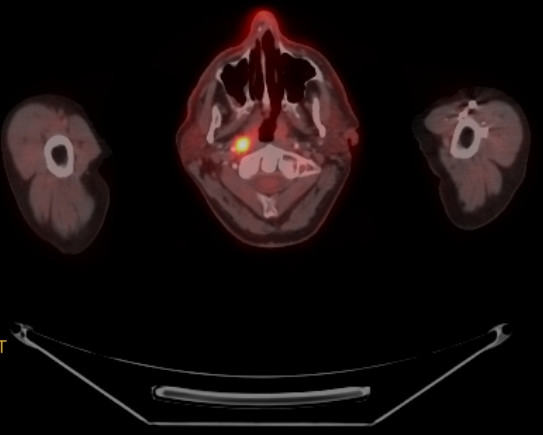 Nasopharyngeal Carcinoma. FDG-PET/CT scan of a patient with nasopharyngeal cancer. Transverse slice demonstrating FDG-positive primary site Gulec SA et al. - Gulec SA, Hoenie E, Hostetter R, Schwartzentruber D. Not altered. CC BY 2.0
Larynx
Acute Epiglottitis
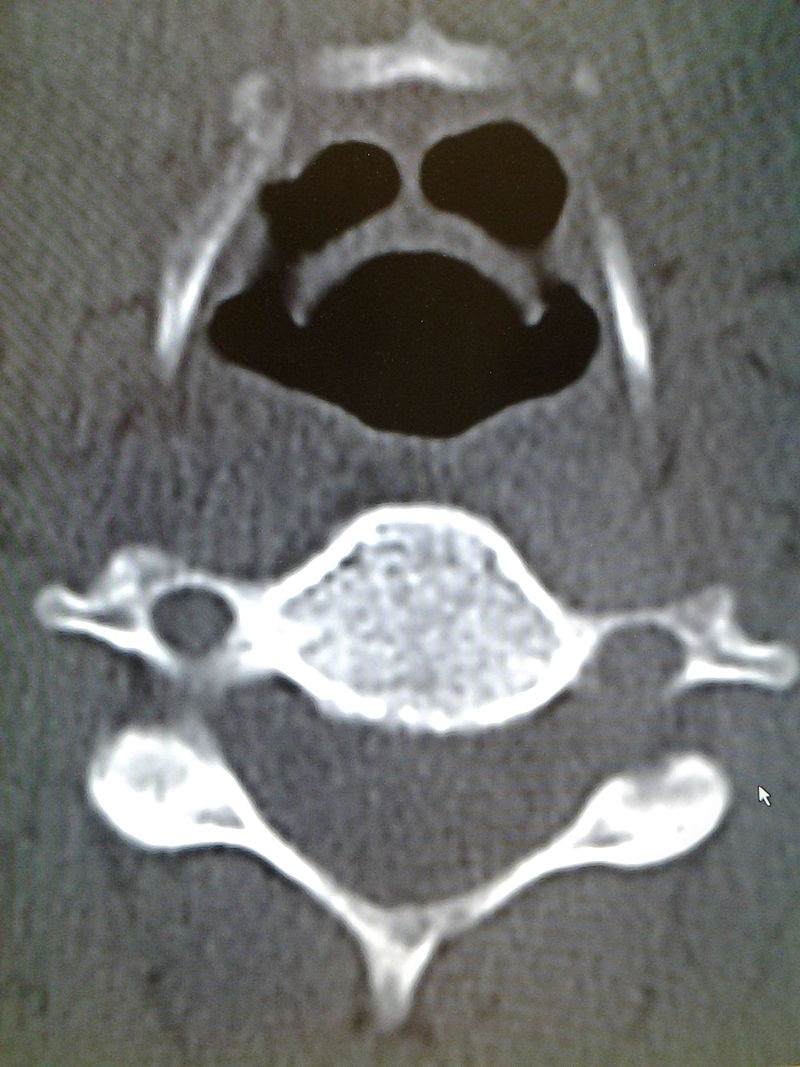
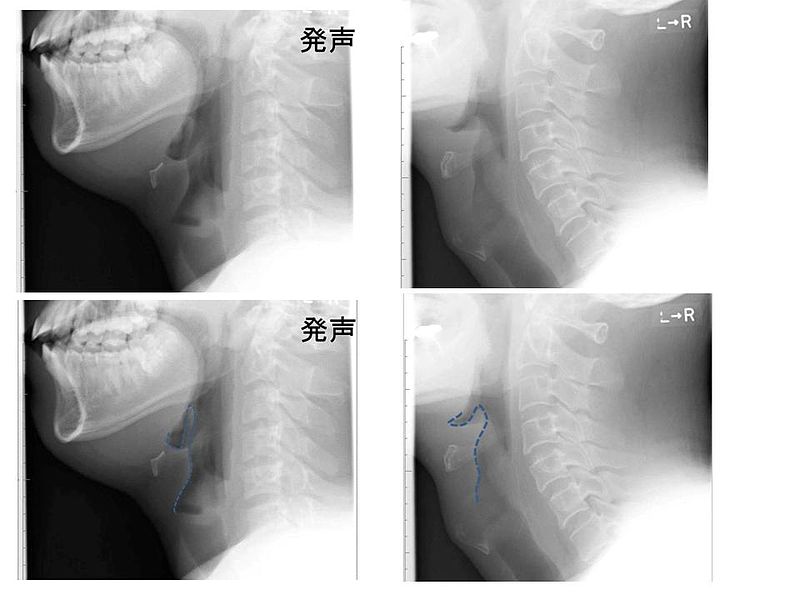
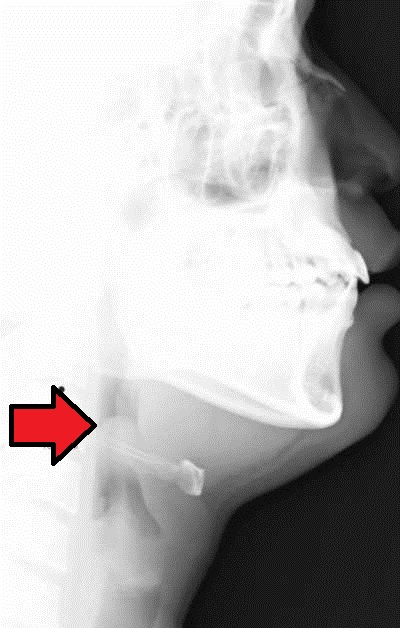
Acute epiglottis is inflammation of the epiglottis.
Hemophilus Influenzae type B is the most typical cause of acute epiglottis, especially in non immunized children.
Common symptoms of acute epiglottis include:
- Fever
- Sore throat
- Dysphagia
- Drooling
- Muffled voice
- Inspiratory stridor
Possible airway obstruction is a complication of acute epiglottis.
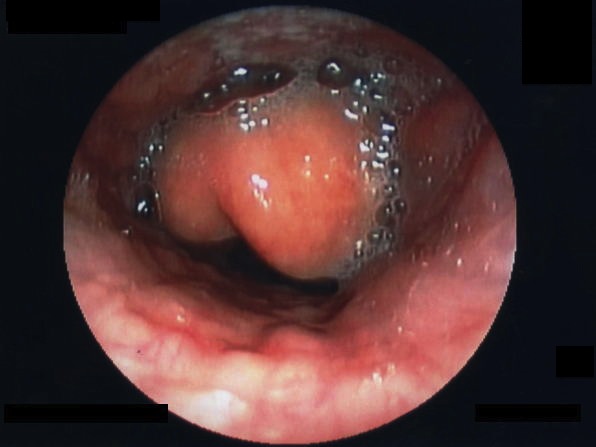 Acute Epiglottitis. Swollen epiglottis in laryngoscopy Dr. Koshiro. Not altered. CC BY-SA 3.0
Laryngotracheobronchitis (Croup)
Laryngotracheobronchitis is an upper airway inflammation.
Laryngotracheobronchitis is also known as croup.
Parainfluenza virus is the most frequent cause of laryngotracheobronchitis.
Laryngotracheobronchitis presents with an inspiratory stridor and a harsh, “barking” cough.
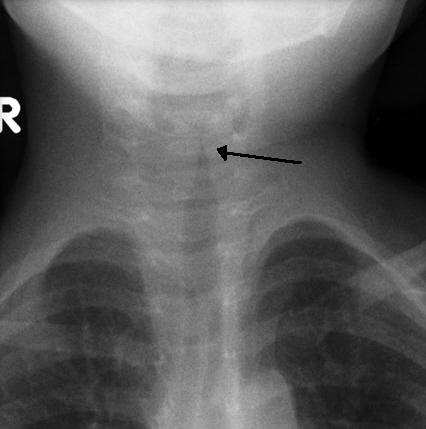 Laryngotracheobronchitis. AP x-ray of the neck in a child with croup demonstrating the steeple sign; narrowing of the the trachea. Frank Gaillard. Not altered. CC BY-SA 3.0
Vocal Cord Nodule (Singer’s Nodule)
Vocal cord nodules are benign growths on vocal cord(s).
Vocal cord nodules result from overuse of the vocal cords.
Hoarseness is a common finding in patients with vocal cord nodules.
Vocal cord nodules are typically bilateral.
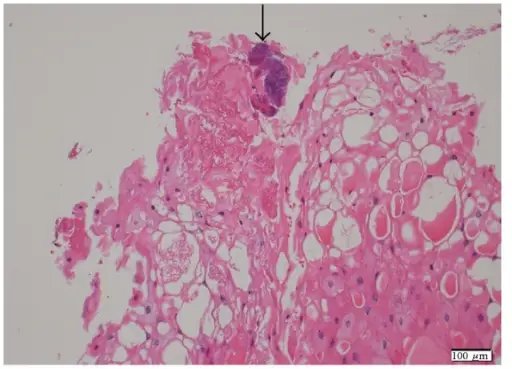
Histology of vocal cord nodules show connective tissue that is in the state of myxoid degeneration.
Treatment of vocal cord nodules is to be silent and talk less to allow the vocal cords to recover.
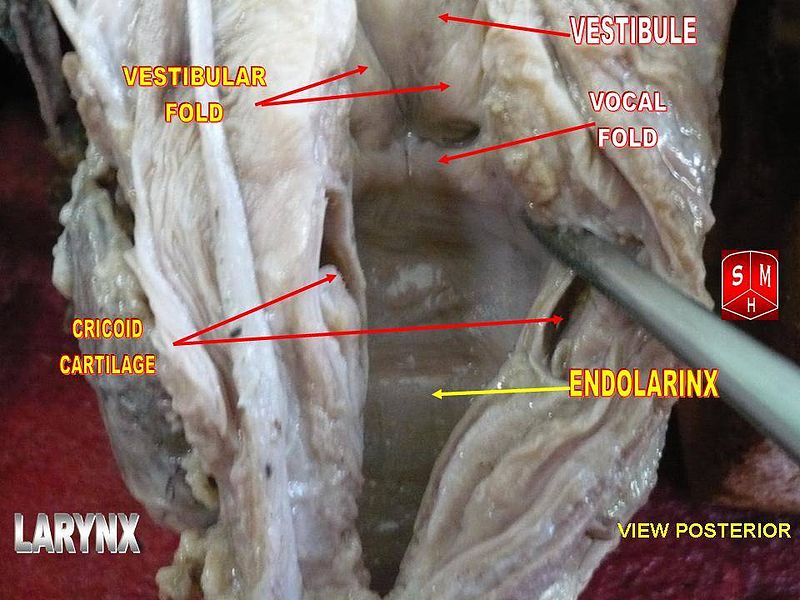 Vocal Cord Nodule. Vocal folds. Anatomist90. Not altered. CC BY-SA 3.0
Laryngeal Papilloma
Laryngeal papilloma is a benign papillary tumor of the vocal cord.
Patients with laryngeal papillomas may present with a raspy voice.
Laryngeal papillomas are often:
- Single in adults
- Multiple in children
HPV 6 and HPV 11 are common causes of laryngeal papillomas.
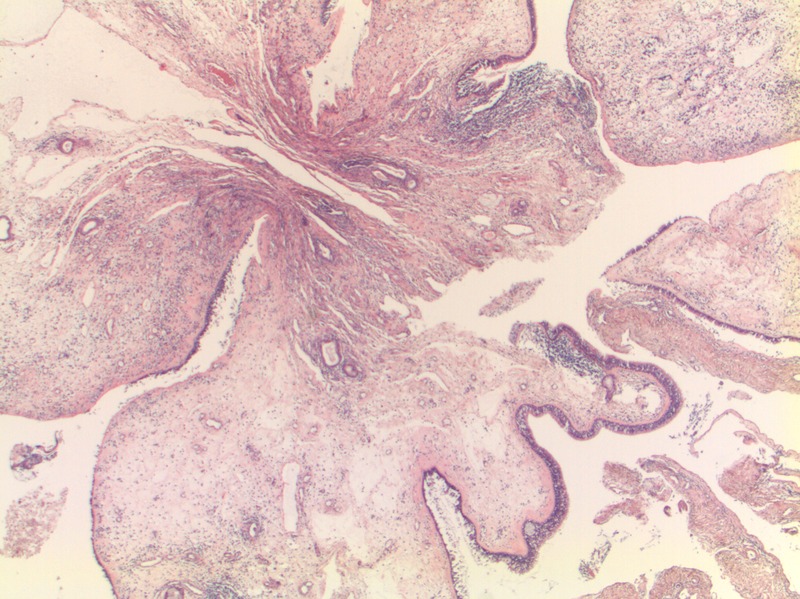
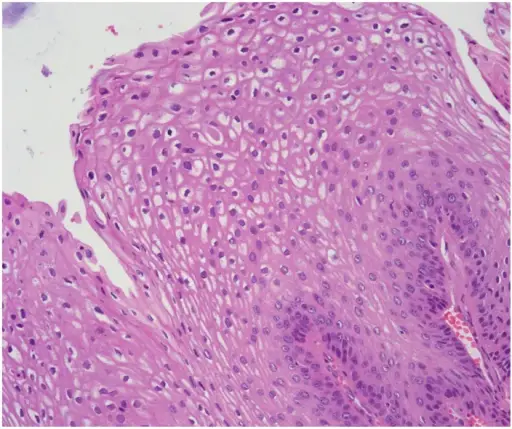 Squamous Papilloma of the Larynx. Laryngeal papilloma without atypia in a patient with adult-onset RRP (HEx20). Recurrent respiratory papillomatosis: HPV genotypes and risk of high-grade laryngeal neoplasia: Omland T, Lie KA, Akre H, Sandlie LE, Jebsen P, Sandvik L, Nymoen DA, Bzhalava D, Dillner J, Brøndbo K - PloS one (2014). Not Altered. CC.
Laryngeal Carcinoma
Laryngeal carcinomas are epithelioid malignancies that effect the larynx.
Squamous cell carcinoma is the most common type of laryngeal carcinoma.
Laryngeal carcinoma typically develops from the vocal cord’s epithelial lining.
Symptoms of laryngeal carcinoma include:
- Hoarseness
- Coughing
- Stridor
Risk factors for laryngeal carcinoma include:
- Alcohol use
- Tobacco smoking
Laryngeal papillomas are an uncommon predisposing lesions that may progress to laryngeal carcinoma.
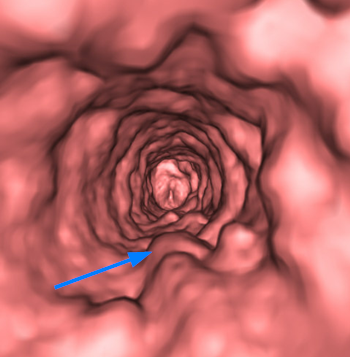
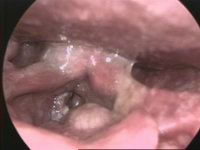 Laryngeal Carcinoma. KGH. Not altered Public Domain