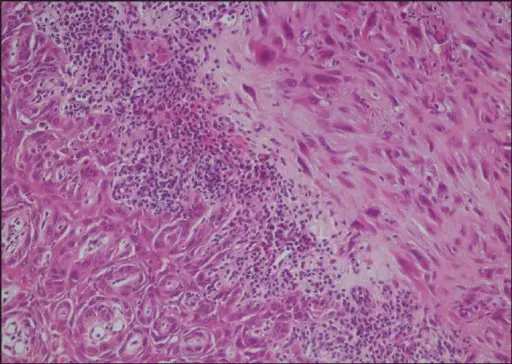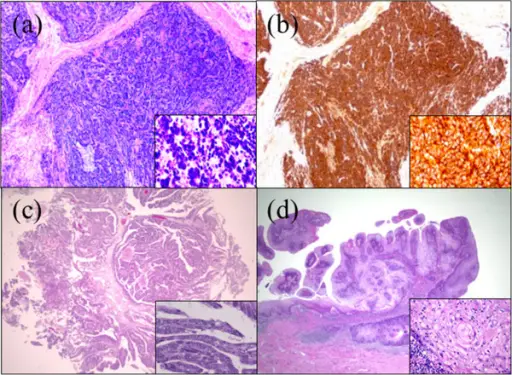

Penis pathology refers to lesions or abnormalities of the penis.
Penis pathology includes:
- Hypospadias
- Epispadias
- Condyloma acuminata
- Lymphogranuloma venereum
- Squamous cell carcinoma (SCC) of the penis
Hypospadias
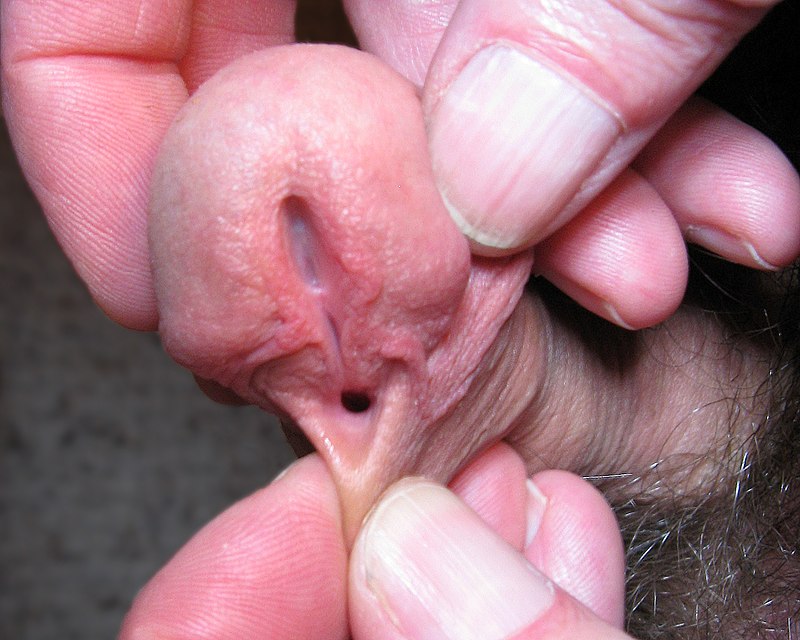
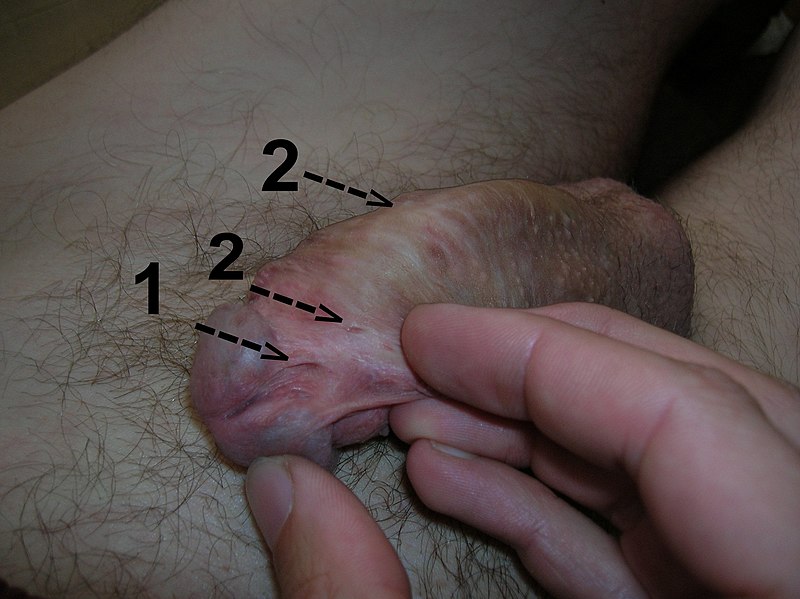
Hypospadias is an opening of the urethra on the penis’s inferior surface.
Hypospadias results as a failure of the urethral folds to close properly.
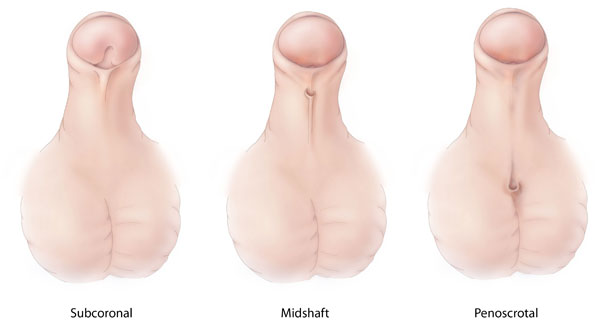 Hypospadias. Different types of hyposadias Centers for Disease Control and Prevention - Not altered. CC0

Epispadias
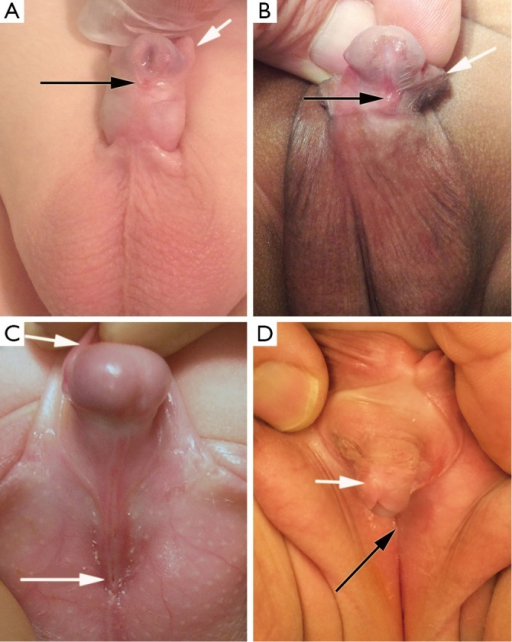
Epispadias is the opening of the urethra on the superior surface of the penis.
Epispadias is the result of abnormal positioning of the genital tubercle.
Epispadias is linked to bladder exstrophy.
Surgical intervention may benefit patients with epispadias.
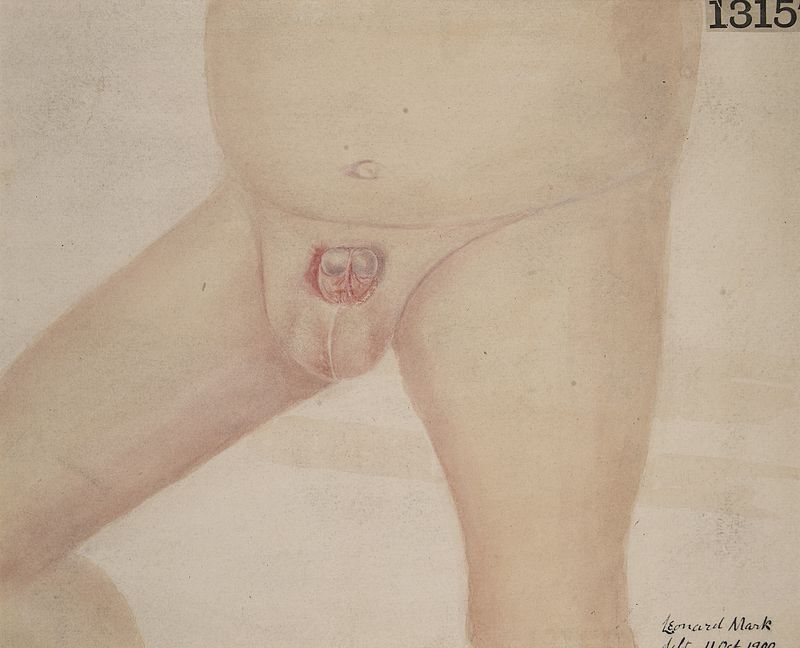 Epispadias. Watercolour drawing showing the condition of epispadias. From a boy aged two years. Medical Photographic Library Keywords: Mark, Leonard Portal Not altered. CC BY 4.0
Condyloma Acuminata
Condyloma acuminata is a benign warty growth on genital skin.
Human papilloma virus (HPV) infections that are known to cause condyloma acuminata include:
- HPV type 6
- HPV type 11
Histology of condyloma acuminata is characterized by koilocytic change.
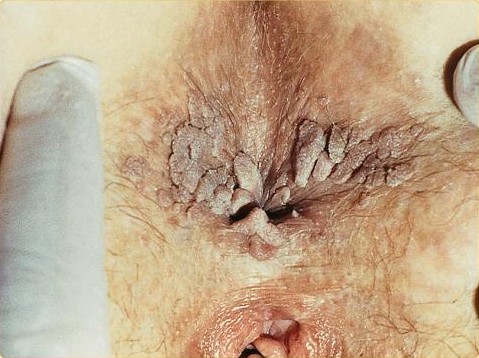 Condyloma. A woman afflicted with genital warts, also called condylomata acuminata, around the anus. These warts are caused by human papillomavirus (HPV). SOA-AIDS Amsterdam. not altered. CC BY-SA 3.0
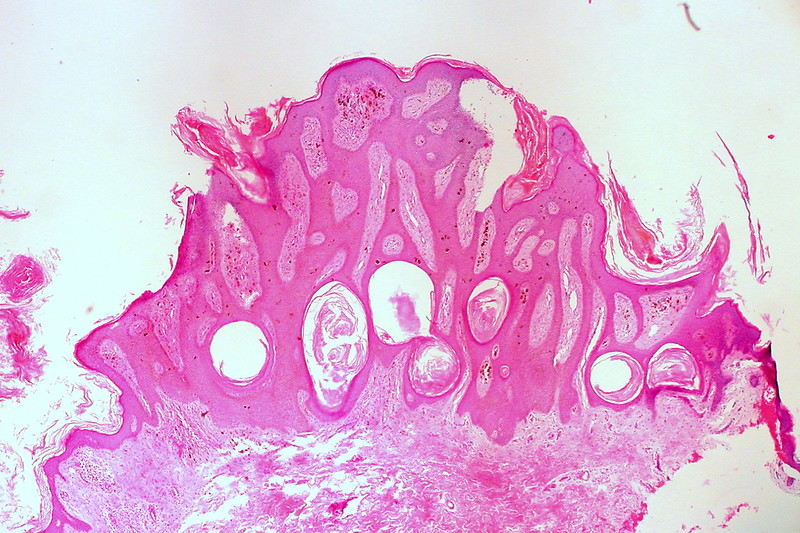
Lymphogranuloma Venereum
Lymphogranuloma venereum is necrotizing granulomatous inflammation of the inguinal lymphatics and lymph nodes.
Lymphogranuloma venereum is a sexually transmitted disease caused by Chlamydia trachomatis (serotypes Ll-L3).
Lymphogranuloma venereum lesions that heal subsequently result in fibrosis.
Perianal involvement of lymphogranuloma venereum can lead to rectal stricture.
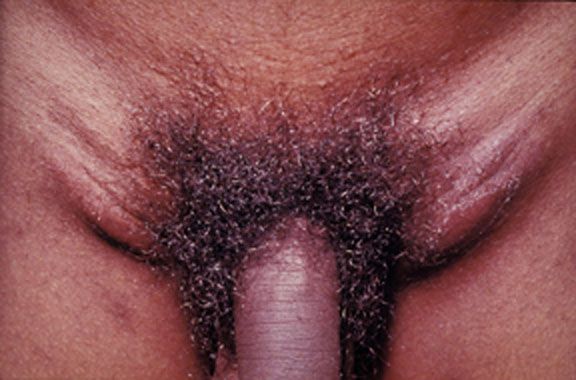 Lymphogranuloma Venereum. Lymphogranuloma venereum: is caused by the invasive serovars L1, L2, or L3 of Chlamydia trachomatis. This young adult experienced the acute onset of tender, enlarged lymph nodes in both groins. Herbert L. Fred, MD and Hendrik A. van Dijk. Not altered. CC BY 2.0
Squamous Cell Carcinoma (SCC) of the Penis
Squamous cell carcinoma (SCC) may occur on the penis.
Risk factors for squamous cell carcinoma (SCC) include:
- Human papilloma virus (HPV)
- Lack of circumcision
- Precursor in situ lesions
- Leukoplakia
- Erythroplasia
- Bowenoid papulosis
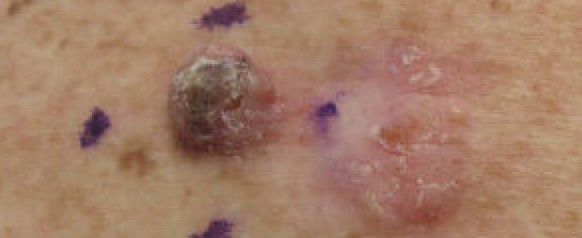 Squamous Cell Carcinoma. Squamous cell carcinoma, well differentiated, left upper paraspinal back marked for biopsy with adjacent actinic keratosis. Dermanonymous. Not altered. CC BY-SA 4.0